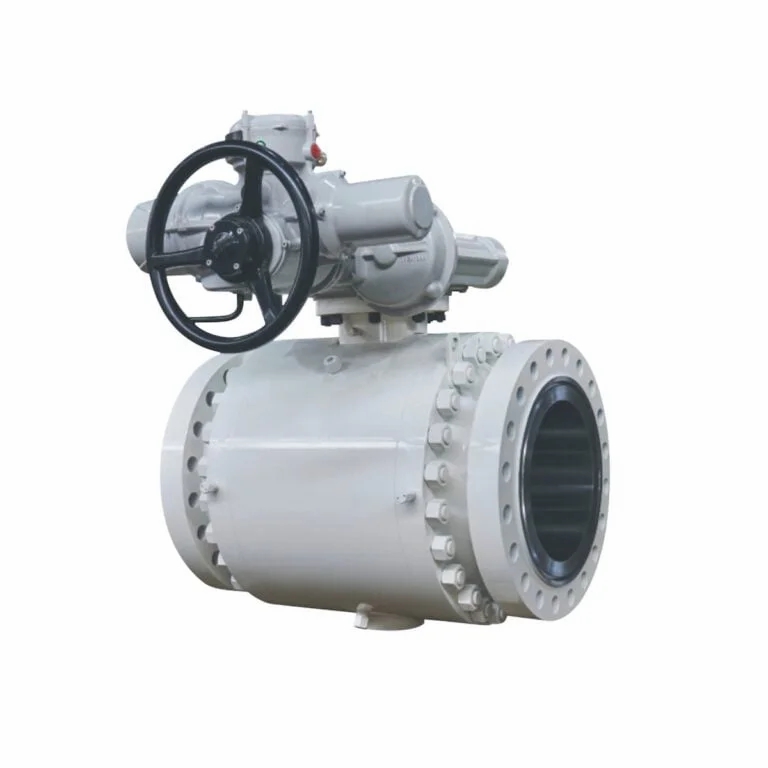
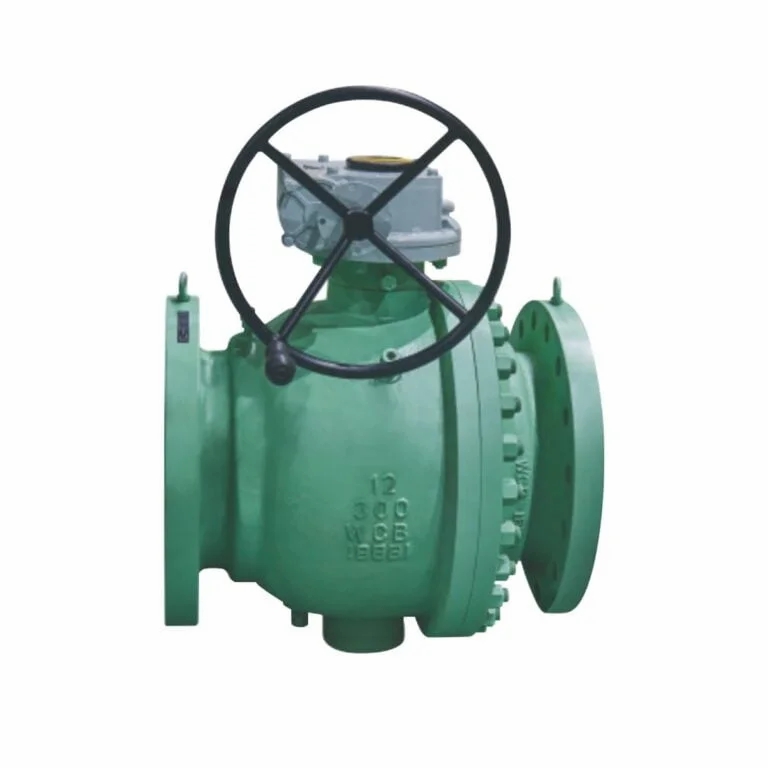
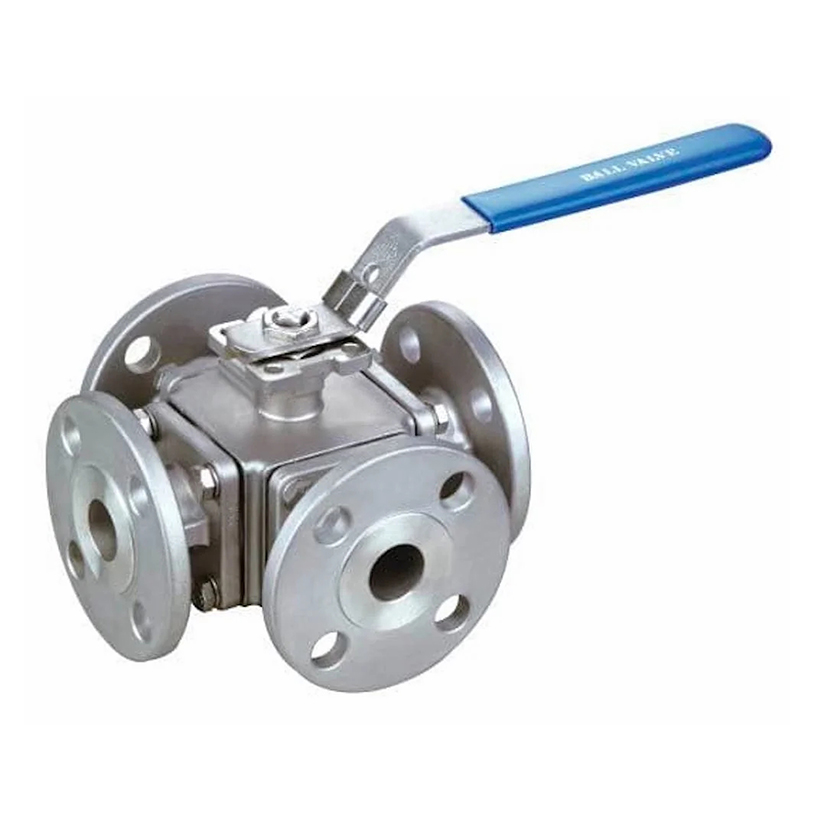
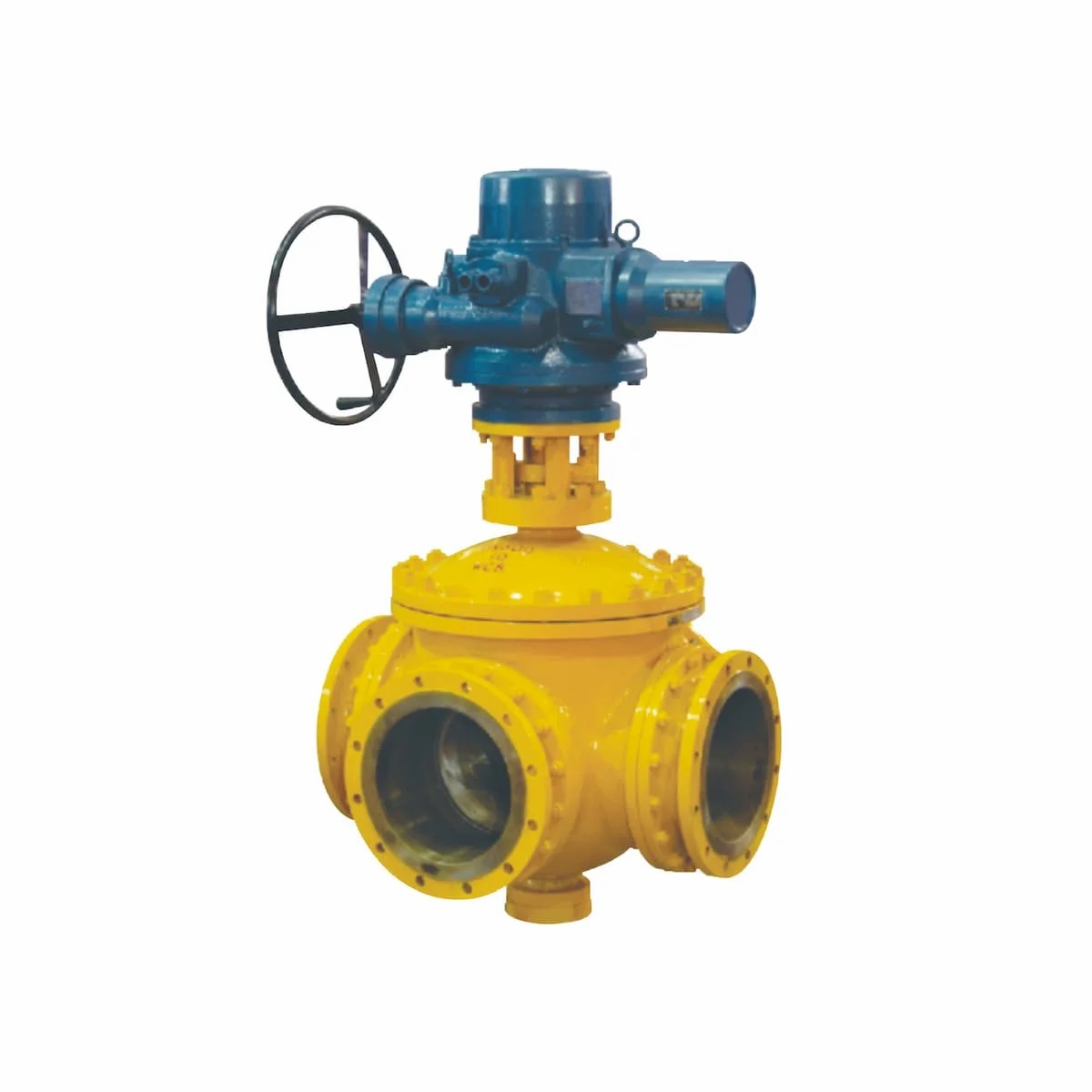
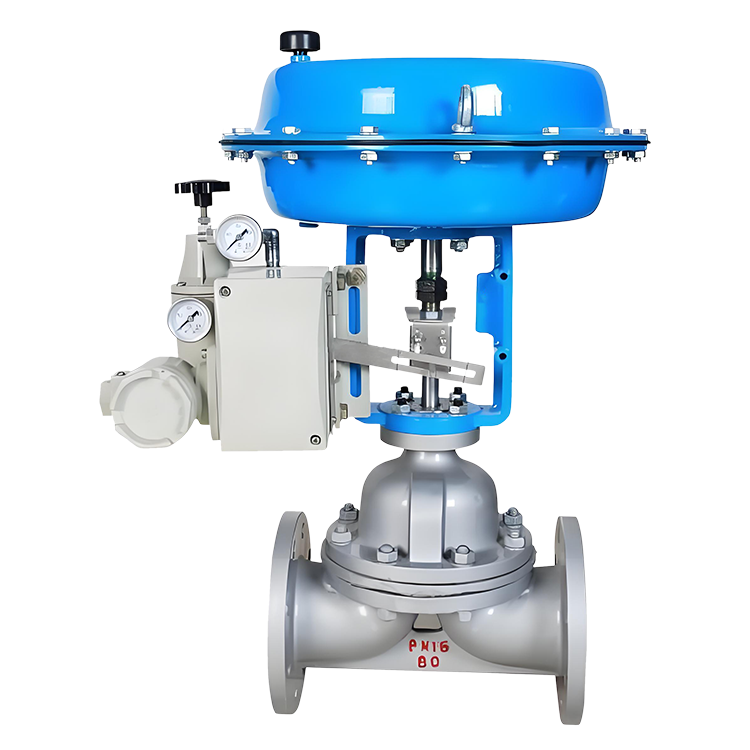
Trunnion mounted ball valves are commonly used in industrial applications where high pressure, high temperature, and large diameter pipelines are involved. Some of the applications where trunnion mounted ball valves are used include oil and gas, petrochemical, chemical, power generation, and water treatment industries.
The trunnion mounted ball valve design provides additional support to the ball, which reduces the torque required to operate the valve. This makes it suitable for high-pressure applications where the valve needs to be operated frequently. The valve also has a floating seat design, which ensures a tight seal even at high pressures.
The trunnion mounted ball valve is also designed to withstand harsh environments and extreme temperatures, making it ideal for use in industries that deal with corrosive or abrasive materials. Additionally, the valve can be automated, making it easy to operate and control remotely.
Automatic pressure relief structure
When the pressure in the middle cavity rises abnormally, the single-sealed ball valve has an automatic pressure relief function, while the double-sealed ball valve is relieved by an additional pressure relief device on the valve body.
Sealed emergency rescue
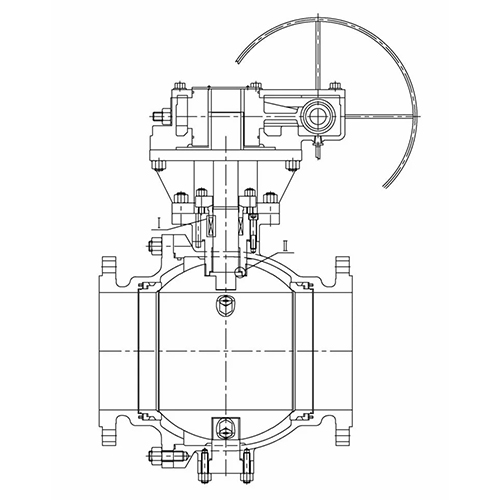
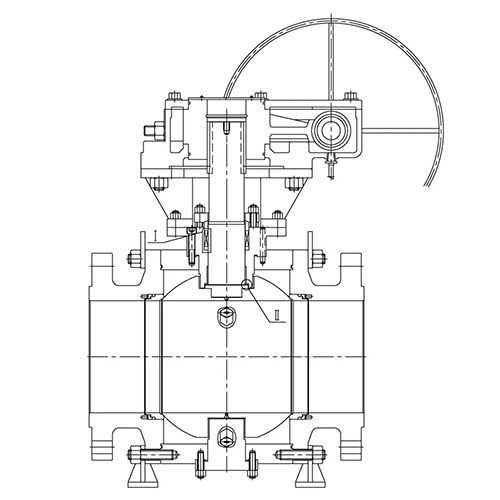
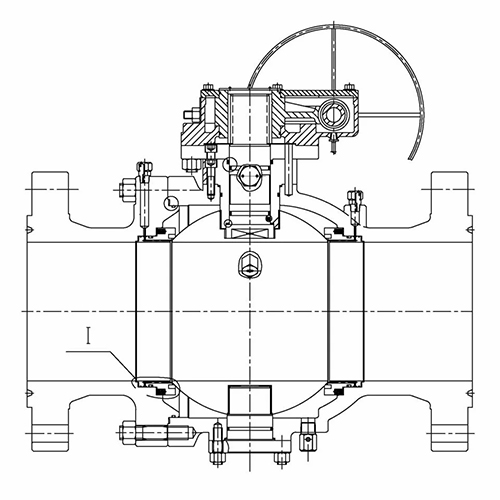
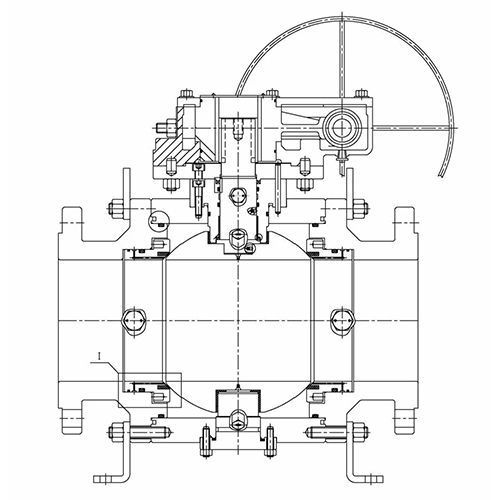
The valve is designed with an auxiliary valve seat emergency sealing system, as shown in the figure. Once the soft seal is damaged or cannot be sealed in an emergency situation, emergency sealing can be performed by injecting corresponding sealant into the auxiliary sealing system. The emergency sealing device can also be used to flush and lubricate the valve seat area when necessary to keep it clean. Similarly, the valve stem can also be designed with an emergency sealing system with auxiliary functions.
Fireproof structure
According to the working conditions and the needs of users, the ball valve can be designed as a fireproof structure. The fire-resistant design of the ball valve complies with the standards of API 607 and GB/T 6899. Once a fire occurs and the soft sealing ring is burned, the fire-resistant structure of the ball valve can prevent a large amount of medium leakage and prevent further expansion of the fire.
Anti-static structure
The electrostatic charge accumulates on the sphere. In order to prevent the generation of static sparks, an anti-static device is specially installed on the valve, and the charge accumulated on the sphere is led out through the electrostatic passage between the sphere and the valve stem, and between the valve stem and the valve body.
Locking device
The manual ball valve is designed with a lockable structure at the fully open and fully closed positions of the manual ball valve, so as to prevent misoperation and unpredictable line vibrations and undesirable switching phenomena, especially in the flammable medium of petroleum. The advantages and actual effects of this design are particularly good when the production line of chemical and chemical drugs and the valve are piping outdoors.
Full diameter structure and reduced diameter structure
In order to meet the different needs of users, the company’s ball valve products have two series of full bore and reduced diameter (as shown in the figure). The channel inner diameter of the full bore ball valve is the same as the pipe inner diameter, which is convenient for pipe cleaning. The reduced diameter series ball valve is relatively light, but the fluid resistance is only about 1/7 of the same diameter globe valve, so the application prospect of the reduced diameter series ball valve is more expansive.
Relief device of valve body
According to user requirements or device system requirements, a drain valve is installed on the valve body of the ball valve. Once the two ends of the valve are closed, the backlog in the valve cavity can be discharged through the drain valve of the valve body, which has the function of double stop and discharge (DBB). Another function of the relief valve of the valve body is to flush and discharge the long-term sludge in the valve body through it.
Anti-corrosion
The wall thickness of the valve body is designed with a certain amount of corrosion allowance. The carbon steel valve stem, fixed shaft ball, valve seat, and bottom cover are all chemically plated on the surface according to ASTM B733 and B656. In addition, there are a variety of anti-corrosion materials for users to choose from. The exterior of the valve uses “international standard” paint which meets the requirements of various environmental conditions.
Resistance to vulcanization stress cracking
Our company produces a series of anti-sulfur ball valves. The materials (including fasteners) of the valve contacting medium are selected according to the requirements of the American Society of Corrosion Engineers standard NACE MR0175, and strict quality control and quality inspection are performed during the manufacturing process to ensure completeness. It meets the requirements of the standard and meets the process requirements of the vulcanization environment.
Extension rod device
For buried earth valves, extension devices can be provided, including extensions for valve stems, grease injection valves, drain valves, etc. The user should specify the extension requirements and length in the order (length generally refers to the distance from the center of the valve channel to the center of the operating device).